Heading to Australia from the US is an incredible experience, but the last thing you want is to arrive and realise you can't charge your phone or laptop. It’s a common travel hiccup, but easily avoidable once you understand the key differences in power systems.
To use an American power plug in Australia, you'll definitely need a physical plug adapter. The sockets are a completely different shape. But just as importantly, you might also need a voltage converter for some of your electronics, because Australian electricity runs at a much higher voltage (230V) than America's standard 120V.
Your Quick Guide to Connecting American Devices in Australia
Let’s get you sorted so you can plug in and power up without a worry. The two main things to wrap your head around are the plug shape and the electrical voltage. Get these two right, and you'll avoid a fried hairdryer or, even worse, a damaged laptop.
Decoding Plugs and Power
First up, the physical plug. Australian outlets are what's known as Type I. They have two flat pins arranged in a distinct V-shape, often with a third, straight pin below for grounding. This is a world away from the familiar parallel flat prongs of the American Type A and B plugs.
You can see exactly what Australian plugs look like here:
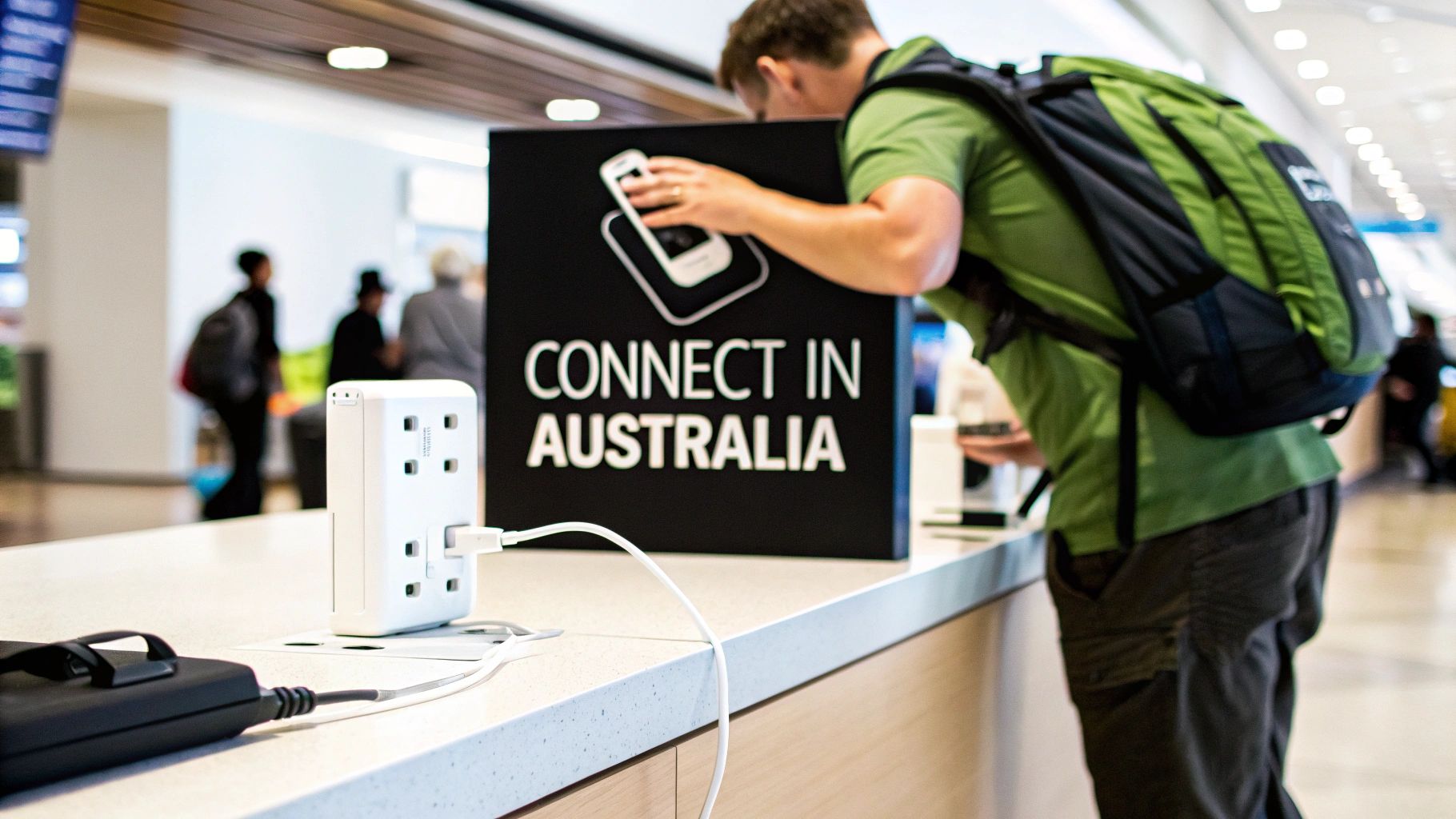
It’s immediately obvious that your American plug just won’t fit. But the shape is only half the story; the real danger to your devices lies in the voltage.
The US runs on a 120-volt system, while Australia uses a much more powerful 230-volt standard. That's a massive 91.7% increase in voltage. Plugging a simple, single-voltage American device directly into that much power is a recipe for disaster.
To put it all in one place, here’s a quick comparison of the two electrical systems.
US vs Australian Electrical Systems at a Glance
This table breaks down the critical differences you need to be aware of before you travel.
| Feature | United States (Type A/B) | Australia (Type I) |
|---|---|---|
| Voltage | 120 Volts | 230 Volts |
| Frequency | 60 Hertz (Hz) | 50 Hertz (Hz) |
| Plug Pins | Two flat parallel pins (Type A) or two flat parallel pins with a grounding pin (Type B) | Two flat angled pins with an optional vertical grounding pin |
Understanding these details is key to keeping your devices safe and functional throughout your trip.
Key Takeaway: Every American traveller needs a simple plug adapter for Australia. However, for devices that aren't dual-voltage (like some older hair dryers or electric razors), you'll also need a voltage converter to safely step the power down from 230V to 120V. Luckily, most modern essentials like phone chargers and laptops are built to handle both and only need the adapter. While you're sorting out your power needs, remember that staying connected is just as important. It’s always a good idea to research your options for an eSIM or portable Wi-Fi ahead of time.
A Tale of Two Plugs: US vs. Australian Sockets
One of the first things you'll notice when you start packing for Australia is that your chargers and plugs look completely different from the ones you'll find there. It’s not a subtle difference, either—they’re fundamentally incompatible.
This isn’t a case of ‘maybe it will fit’. It absolutely won’t. Let's get a clear picture of what you’re bringing versus what you'll be plugging into.
What You're Packing: American Type A and Type B Plugs
Chances are, your American gadgets use one of two types of plugs:
-
Type A: This is the classic two-pronged plug you see everywhere. It has two flat, parallel pins and is common on smaller electronics like phone chargers or cameras.
-
Type B: This is the beefier, three-pronged version. It has the same two flat pins as Type A, but with an added round or U-shaped pin for grounding. Your laptop charger or hair dryer probably has this one for extra safety.
These are designed for the standard vertical slots you see on every wall in the US.
What You'll Find Down Under: The Aussie Type I Plug
Once you land in Australia, you'll be met with a completely different beast: the Type I plug.
This plug has two flat pins angled inwards to form a 'V' shape, plus an optional third, vertical pin below them for grounding. It’s a design unique to Australia, New Zealand, and a few other places, so don't expect to see it in Europe or North America.
This unique configuration, officially known as AS/NZS 3112, is the reason why 100% of American devices won't work in Australian sockets without help. You can learn more about its specific design on the official specifications page.
The bottom line? The shapes are a total mismatch. Trying to force a parallel American plug into an angled Australian socket is like trying to fit a square peg in a round hole. It just won’t happen.
Understanding this physical difference is the first, most important step. It's why a travel adapter isn't just a suggestion; it's essential.
A quick safety tip: If your American device has a three-pronged Type B plug, make sure you get an adapter that also supports that third grounding pin. It's there for a reason—to protect you from electric shock if something goes wrong. Don't compromise on safety for the sake of a slightly smaller adapter.
Do I Need a Converter or Just an Adapter?
This is the big one. Getting this part wrong can turn your favourite gadget into a very expensive paperweight. Figuring out if you need a simple plug adapter or a heavier voltage converter is probably the most important thing you'll do before packing your electronics for Australia.
So, how do you know? It all comes down to the tiny print on your device's charger or power brick.
An adapter just changes the physical pin shape so your American plug can fit into an Australian socket. It's a simple, passive piece of plastic and metal. A converter, on the other hand, is an electrical device that actively changes the voltage, stepping down Australia's 230V power to the 120V your American appliance might expect.
How to Check Your Device's Voltage
Before you even think about packing that charger, flip it over. Look for a block of tiny text, usually near the prongs, labelled "INPUT". This little label holds the key.
What you're hoping to see is a range of numbers, something like "INPUT: 100-240V". If you see that, you're golden. This means your device is dual-voltage and can handle anything from 100 to 240 volts, which easily covers both the US and Australian standards. Most modern electronics—laptops, phone chargers, camera chargers—are built this way for global travellers.
This infographic breaks down the decision-making process for you.
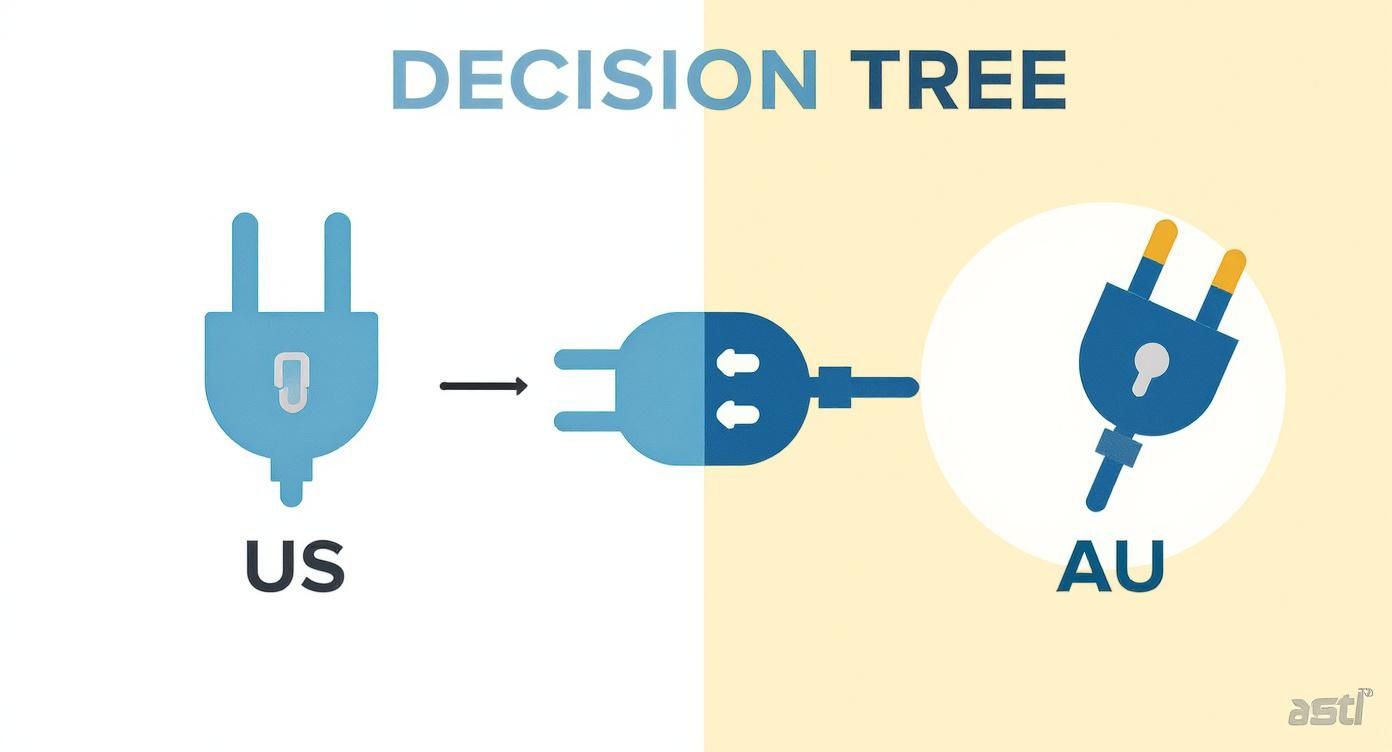
Ultimately, the voltage rating printed on your device is the only thing that matters when deciding between an adapter and a converter.
Dual-Voltage vs. Single-Voltage Gadgets
The good news is that most of the tech you'll want to bring is probably dual-voltage. For these items, all you need is a simple american power plug to australian adapter.
These almost always include:
- Laptop chargers (Apple, Dell, HP, you name it)
- Smartphone and tablet chargers (iPhone, Samsung, Google Pixel, etc.)
- Camera battery chargers
- Portable game consoles like the Nintendo Switch
The real trouble comes from devices that are single-voltage. These are the ones you need to watch out for. Their "INPUT" label will clearly state something like "110V," "120V," or a very tight range that doesn't go anywhere near 230V. These are typically items with heating elements or powerful motors.
A Quick Warning: Never, ever plug a 120V single-voltage appliance directly into a 230V Australian socket with just an adapter. You'll fry it instantly. Best case, you trip the circuit breaker. Worst case? Smoke, melted plastic, and a serious fire hazard.
The most common single-voltage offenders are:
- Hair dryers and straighteners
- Electric shavers and some electric toothbrushes
- Small kitchen appliances like bottle warmers
If you absolutely must bring a single-voltage device, you’ll need a step-down voltage converter. This device plugs into the wall first, then you plug your American appliance into it. It physically transforms the 230V electricity into a safe 120V current.
Honestly, though? Converters are heavy, bulky, and can be expensive. For things like a hairdryer, it's often far easier—and safer—to just buy a cheap one when you land in Australia or use the one provided in your hotel room.
So, Which Adapter or Converter Should You Actually Buy?
Alright, now that you know what your devices need, it’s time to pick the right gear. This is the final piece of the puzzle, and getting it right means you’ll be powered up and safe throughout your whole trip. The market is flooded with options, but a few key features will help you separate the genuinely useful gadgets from the cheap junk.
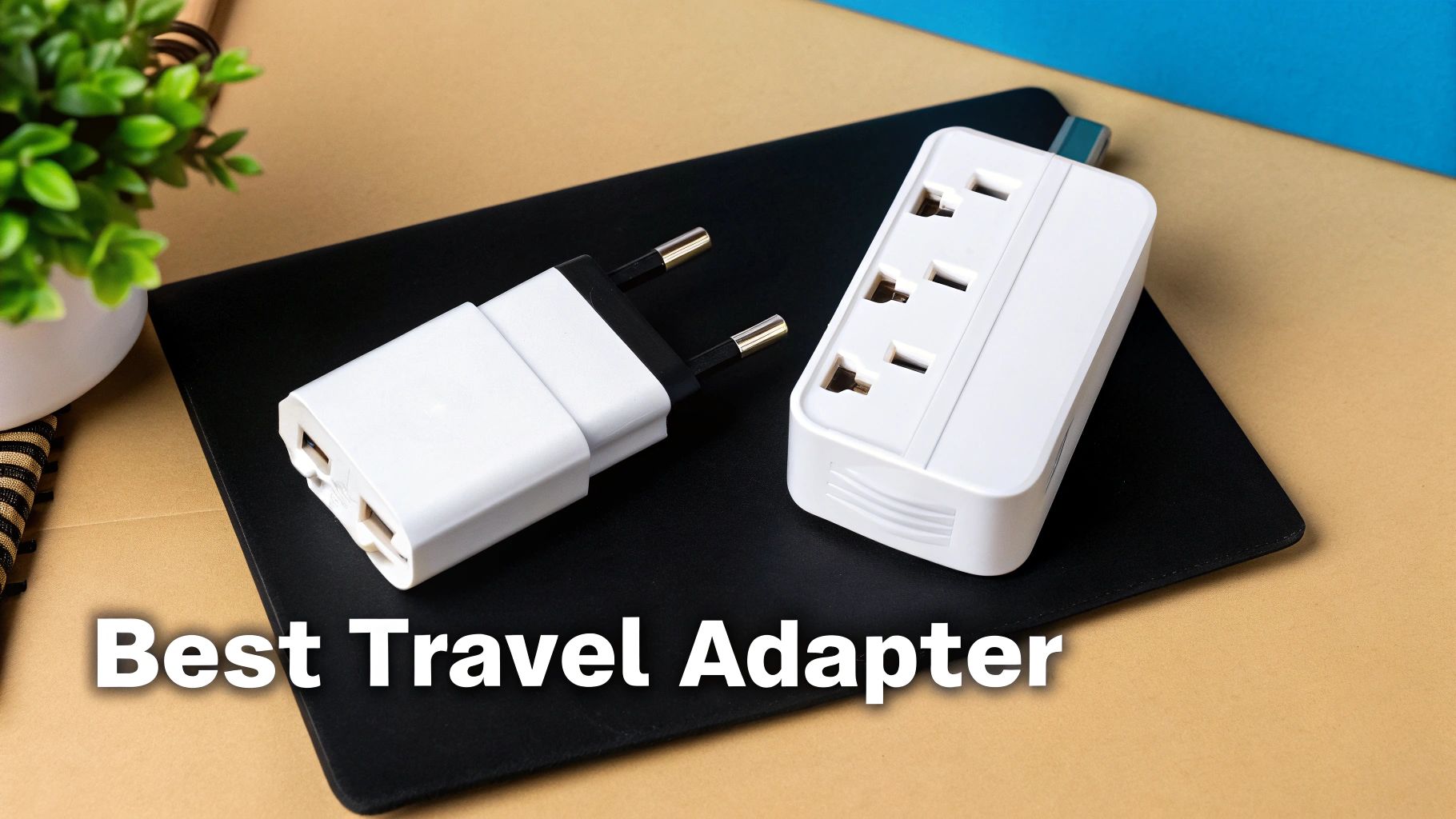
First up, you need to decide between a simple, single-country adapter and a more versatile universal one. A basic American power plug to Australian adapter is your no-fuss option. It’s small, light, and does exactly one job. If you're only heading to Australia, this is a fantastic, budget-friendly choice.
On the other hand, if you're a globetrotter, a universal adapter is a much smarter long-term investment. The good ones have clever sliders or swappable heads that work in different regions, like the UK, Europe, and Asia. Think of it as a one-and-done solution for all your future travels.
What to Look for When You're Shopping
Trust me, not all adapters are made equal. To keep your gadgets safe and your life easy, keep an eye out for these essential features.
- USB Ports (A and C): This is a total game-changer. Most modern adapters now come with built-in USB-A and USB-C ports. It means you can charge your phone, tablet, and maybe even your camera all at once from a single wall socket, leaving all those bulky power bricks back at the hotel.
- Surge Protection: While Australia has a reliable power grid, voltage spikes can happen anywhere, anytime. An adapter with built-in surge protection gives you an extra layer of defence for your expensive electronics. Your laptop will thank you.
- Safety Certifications: This one's non-negotiable. Always, always look for safety certification marks. For Australia, you want to see compliance with AS/NZS standards. This little mark tells you the product has been properly tested and won’t pose a fire hazard.
To make it even easier, here’s a quick checklist to guide you when you’re comparing different models online or in-store.
Feature Checklist for Your Travel Adapter or Converter
| Feature | Why It's Important | Recommended For |
|---|---|---|
| Type I Compatibility | The absolute essential. This ensures the plug physically fits into an Australian socket. | All travellers to Australia. |
| Built-in USB Ports | Frees up the main socket and reduces the number of chargers you need to pack. | Everyone, especially those with multiple gadgets like phones, tablets, and smartwatches. |
| Surge Protection | Protects your electronics from unexpected power surges that could cause permanent damage. | Travellers with expensive gear like laptops, high-end cameras, or drones. |
| Voltage Converter Function | Steps down Australia's 230V to the 110-120V required by single-voltage American devices. | Only for single-voltage electronics like certain hair dryers or electric shavers. |
| Safety Certifications | Verifies the product has been tested to meet safety standards, reducing the risk of fire or shock. | All travellers. Don't compromise on safety to save a few dollars. |
| Compact & Lightweight | Saves precious space and weight in your luggage. | Backpackers, minimalist travellers, or anyone trying to avoid excess baggage fees. |
Choosing an accessory that ticks these boxes means you’re investing in something that is not only convenient but, most importantly, safe.
The Best Time and Place to Buy Your Gear
A little bit of planning here can save you a whole lot of money and stress. The best advice I can give you is to buy your adapter or converter before you leave the United States. You’ll find a massive selection on sites like Amazon, letting you read real reviews and compare all the features to find the perfect one for your needs.
I’ve seen so many people make this mistake: waiting until they land at an Australian airport to buy an adapter. The selection is tiny, and the prices are ridiculously inflated to catch unprepared travellers. You might find something in a city electronics store, but do you really want to spend your precious holiday time on a scavenger hunt for a plug?
For anyone travelling with medical equipment or mobility aids, this planning becomes even more critical. You simply can't leave it to chance. If you need to arrange power for these essential devices, it's worth looking into specialised services that handle all the logistics for you. You can find out more about simplifying this part of your trip by exploring available travel add-ons. Getting this sorted out ahead of time ensures you have reliable, certified equipment waiting for you the moment you arrive.
Safety Tips for Using Electronics in Australia
Getting your plug to fit the wall socket is only half the battle. You’ve got to make sure your electronics run safely, because a simple mistake can fry your expensive gear or, even worse, create a genuine hazard.
The number one rule is a simple one: never force a plug into a socket. If it doesn't slot in easily with the correct adapter, stop what you’re doing and figure out what’s wrong.
Before you even think about plugging anything in, check the voltage rating on your device. As we’ve discussed, connecting a 120V American appliance to an Australian 230V outlet will instantly destroy it and poses a serious fire risk. Even if your device is dual-voltage, don't risk it with a cheap, uncertified adapter. Those knock-offs often have shoddy wiring and can easily overheat or short-circuit.
Handling Multiple Devices Safely
I know it’s tempting to just pack your American power board to charge all your gadgets at once. Don't do it. This is a massive mistake. Most power strips from the US are only rated for 120V and simply can't cope with Australia's much higher voltage. Using one is a recipe for disaster – it could overheat, fail completely, or even catch fire, taking your connected devices with it.
Instead, here are a couple of much safer ways to go about it:
- Get an adapter with multiple USB ports. For things like phones, smartwatches, and tablets, this is your best bet. It lets you charge several low-power items from just one wall socket.
- Buy a local power board when you arrive. If you absolutely need multiple full-sized outlets for things like laptops or camera chargers, just buy a 230V-rated power board once you're in Australia. It's the safest and most reliable solution.
What to Do in an Emergency: If you accidentally plug in the wrong device and see sparks, smell burning plastic, or hear a pop, your first move is to switch the power off at the wall. Every Australian socket has its own switch. Only then should you unplug the device.
Special Care for Medical Equipment
If you're travelling with essential medical equipment like a CPAP machine or a portable oxygen concentrator, there’s no room for error. These devices are lifelines, so guaranteeing they have a safe and stable power supply is absolutely critical.
Before your trip, get in touch with the manufacturer to confirm your device is dual-voltage and certified for use with Australia's 230V/50Hz system. You’ll also want to pack a separate, high-quality adapter just for your medical gear.
For more detailed information on travelling with medical supplies, our advice on handling medication abroad offers a great checklist to make sure you've covered all your bases. A little extra planning here brings a lot of peace of mind, so you can actually relax and enjoy your trip.
Your Top Questions About Australian Power, Answered
Heading to Australia with a bag full of American gadgets? You're not alone. It's completely normal to have a few last-minute questions about power. When you're dealing with electricity in a new country, it's always smart to double-check.
Let's clear up some of the most common queries from American travellers so you can keep everything charged up safely and without any stress.
Can I Use My American iPhone Charger in Australia?
Yes, you're good to go! Apple designs its official power adapters for iPhones, iPads, and MacBooks with global travel in mind.
Take a look at the tiny print on your charger brick. You'll see something like "Input: 100-240V". That little line of text is your confirmation that it's a dual-voltage device, meaning it can handle both America's 120V and Australia's 230V without a problem.
All you'll need is a simple plug adapter to make your American prongs fit into an Australian socket. No heavy voltage converter needed for your Apple gear.
What Happens If I Plug My 120V Hair Dryer Into a 230V Outlet?
This is the one travel mistake you absolutely want to avoid. Plugging a single-voltage American appliance rated only for 120V (like most standard hair dryers or curling irons) directly into a 230V Australian outlet is a recipe for disaster.
The huge surge of power will instantly fry the appliance's internal workings. Best case scenario? You’ll hear a loud pop, maybe see a spark, and trip the circuit breaker. Worst case? The device could melt, smoke, or even catch fire, and it will be completely destroyed either way.
For any gadget that isn't clearly marked "100-240V", you must use a step-down voltage converter.
A Traveller's Tip: Honestly, for power-hungry items like hair dryers, it’s usually easier, safer, and lighter on your luggage to just buy a cheap one when you get to Australia. Big department stores like Kmart or Big W have them for next to nothing. Better yet, most hotels will have one you can use.
Should I Buy an Adapter in the US or in Australia?
My advice? Always buy your adapter before you leave home. You’ll find a much better selection online or in electronics stores in the US, where you can pick a quality adapter with handy features like extra USB ports. Buying ahead also lets you read reviews to make sure you're getting something reliable.
You can find them in Australian airports and tourist shops, but you'll almost certainly pay a premium for a limited selection of basic models. Get it sorted before you fly, and you'll be ready to charge up the moment you check in, avoiding that last-minute scramble and tourist-trap pricing.
Will My American Power Strip Work in Australia?
Absolutely not. Please, never bring a standard American power strip or surge protector to Australia and use it with a plug adapter.
These devices are almost always rated for 120V only. Plugging one into a 230V socket is a serious fire hazard, as it can overheat and fail spectacularly. On top of that, the surge protection feature won't work correctly, leaving your expensive electronics exposed.
If you need to power up multiple gadgets at once, you have a couple of safe alternatives:
- Grab a universal travel adapter that has multiple USB ports built right in.
- Buy a proper, 230V-rated power board once you arrive in Australia.
This way, you can juice up all your devices without risking damage to them, your accommodation, or yourself.
At Exclusively Inclusive Travel, we believe that accessible and worry-free travel should be the standard for everyone. Our team specialises in crafting custom journeys that cater to your specific needs, ensuring every detail, from power adapters for medical devices to accessible transport, is handled with care. Start planning your incredible Australian adventure with a team that puts you first. Travel with comfort, dignity, and delight.
Article created using Outrank